
Ihitai A'vei'a Star Navigator
Composer Tim Finn
Libretto Tim Finn, Celestine Hitiura Vaite
Director John Davies
Conductor Uwe Grodd
Auckland, March 19 2021 & 9-11 December 2022
Ihitai A’vei’a Star Navigator is a series of songs sung by James Cook, the great English navigator
and map maker of the Pacific, and Tupaia, the Tahitian who joined the voyage on Cook’s Endeavour in 1769.
James Cook went to Tahiti to map the transit of Venus across the face of the sun and then voyaged south to prove whether or not there was indeed a Terra Australis, a southern continent; an idea that had been mooted in the 5th century, and perhaps earlier. Tupaia, a navigator, and his acolyte Teata took ship aboard the Endeavour. Their voyage was extraordinary, but they both died after about 18 months. Only recently has their story really become known. The songs are punctuated by three monologues delivered in Tahitian, as are some of the other lyrics.
The songs are written in a folk opera style with sumptuous orchestration, and the trade mark melodies of the composer Tim Finn, who for decades has published albums and performed throughout the world, especially New Zealand and Australia, with his very popular band Split Enz.
Tim was commissioned by West Australia Opera and New Zealand Opera, and now six years of workshopping and composition it was ready to be performed.
I was invited to direct the world premiere. Over the six-year development period, many decisions had been made, and I was handed a fairly narrow brief. 120 voice choir, a 70-piece orchestra, and the five principles all on stage at the Manukau Vodafone Events Centre, BNZ Theatre.
Basically, the principal’s performance area was a three metre deep and 11 metre wide strip in front of the orchestra and choir. I was told it was to be a concert, and my job would be more “directing traffic rather than directing opera”.
I don’t know anything about directing traffic. I knew I couldn’t live with the thought of them just standing at a lectern singing. So I began nudging it towards something more theatrical. But how could I stage it?
I took my inspiration from Noh. I told the company that because these are ancestral figures, we must summon them to the stage, we must care for them when they get here, and treat them with the reverence due their status. They would sit with us from the beginning all the way through. When they sing, they would be active in the task of singing, but when not, they would sit and be present as an ancestor sits.
It really worked. The singers got it straight away, and we were able to build everything from this. I talked to them about the origins of how an ancestor can be manifest in the theatre, character didn’t really come into it. It was more about presence, communion, and the rest just flowed from that.
The guidance to this approach comes directly from my involvement with Noh and Udaka Mishichige Udaka Sensei and his colleagues in Kyoto, particularly Ogama Rebecca Teele. To these people, I express my admiration and gratitude.
The three performances were sold out with standing ovations. Not usual in undemonstrative New Zealand.
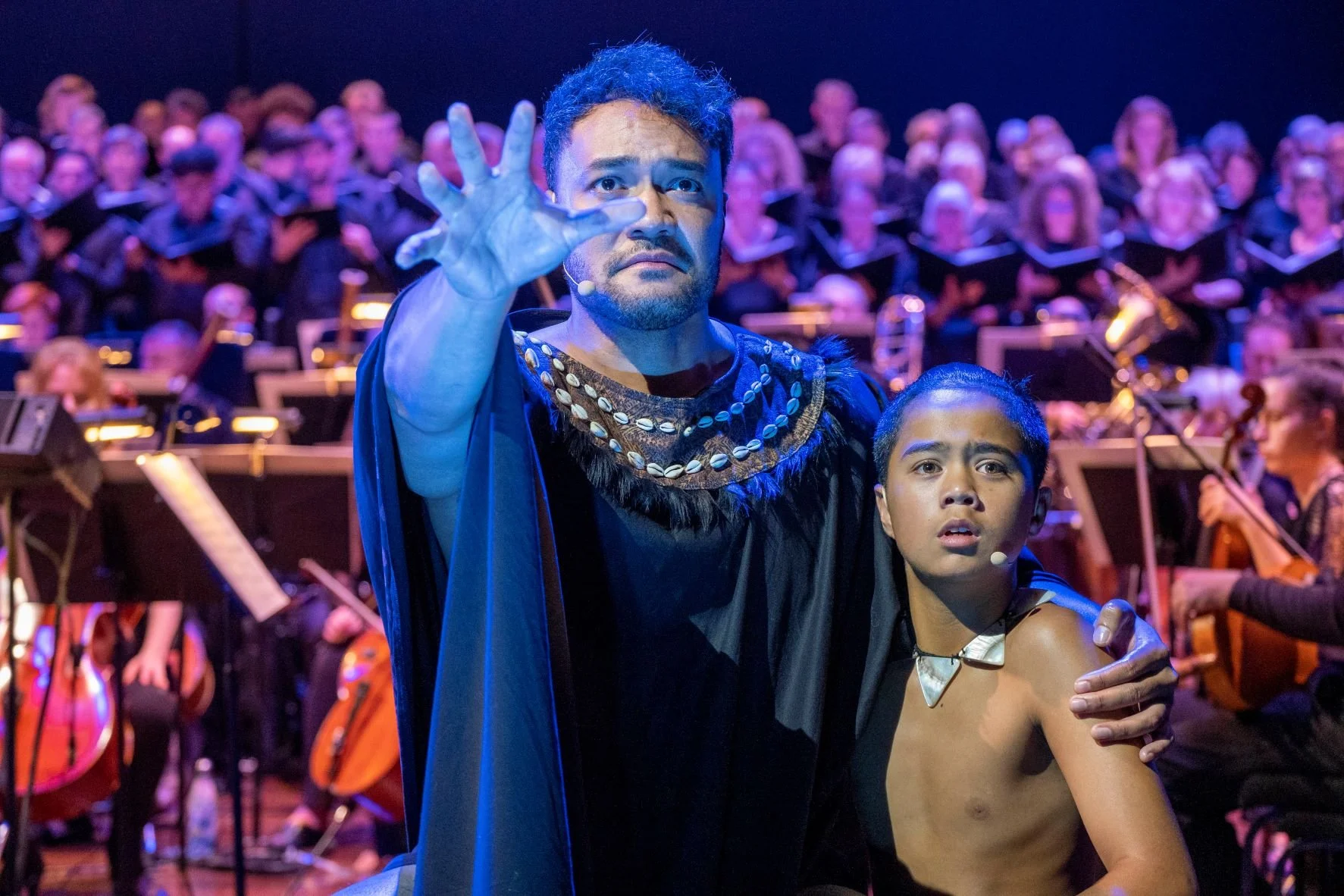
By Grant Triplow - Uploaded as part of the NZ Opera Wikipedian in Residence project., CC BY-SA 4.0, https://commons.wikimedia.org/w/index.php?curid=109307682
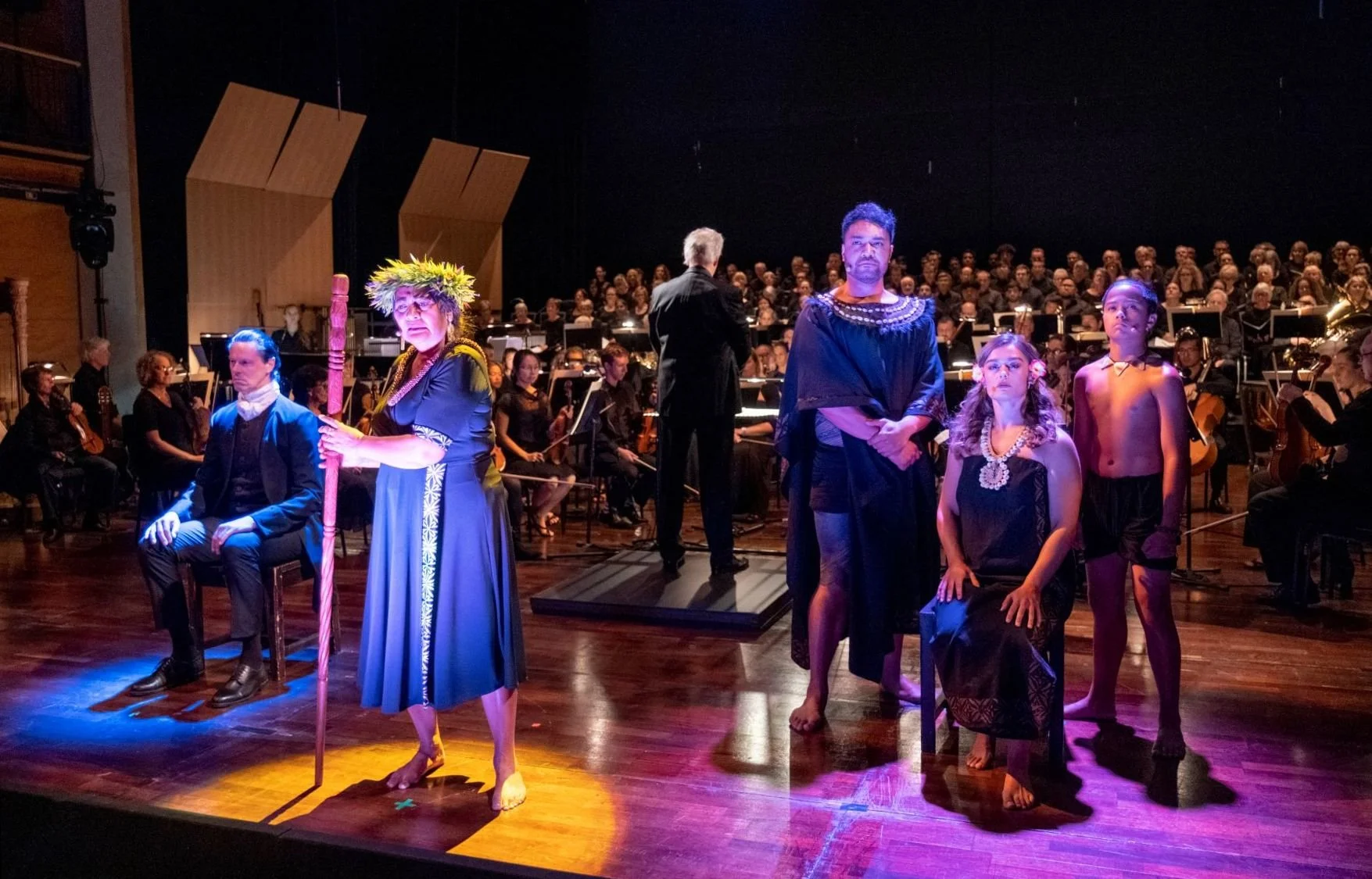
By Grant Triplow - Uploaded as part of the NZ Opera Wikipedian in Residence project., CC BY-SA 4.0, https://commons.wikimedia.org/w/index.php?curid=109307676